From one component to the whole power plant.
Morton Labs is the operating layer for simulation-driven engineering — the physics codes your scientists already trust, connected into one system: orchestrated, versioned, auditable.
Model one component's behavior.
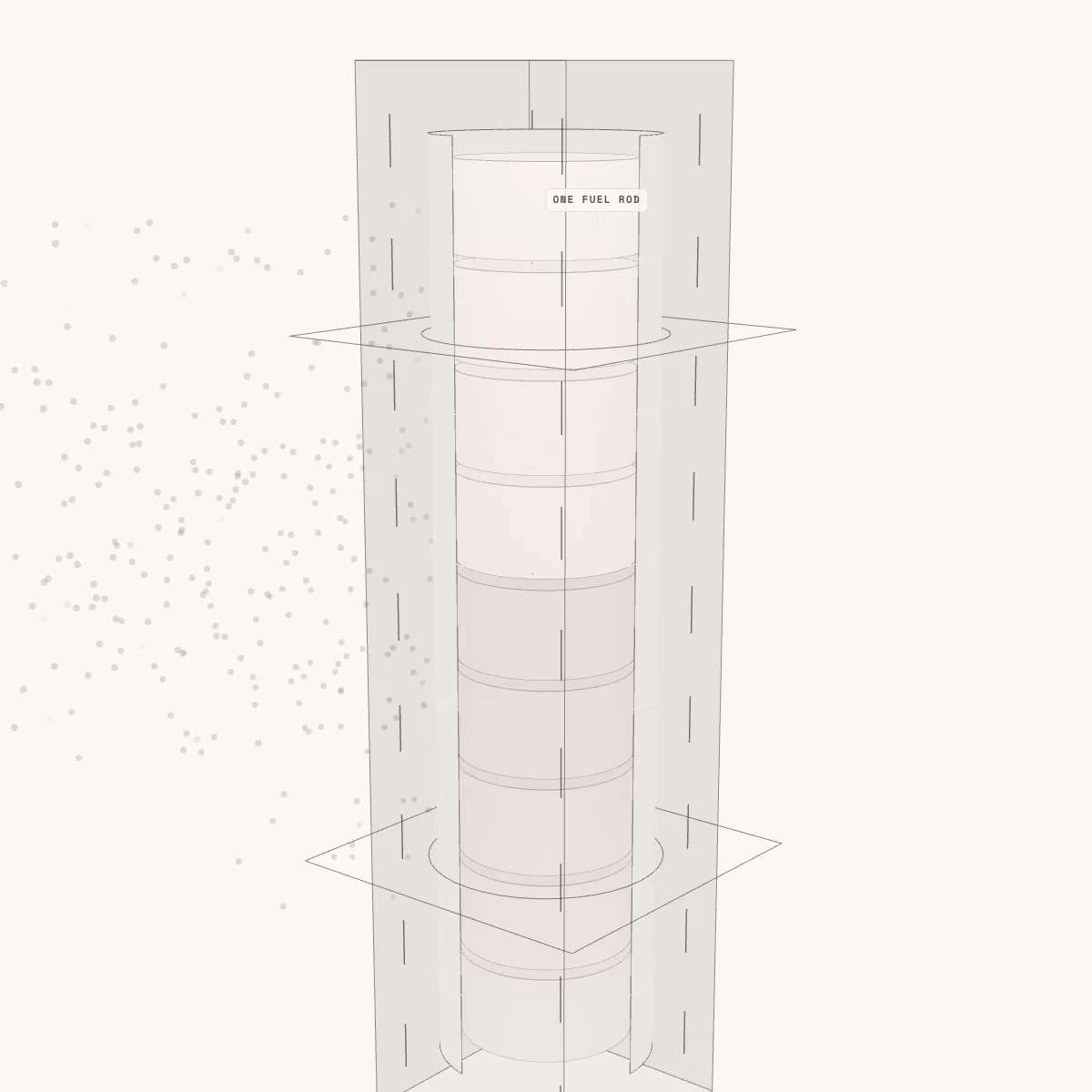
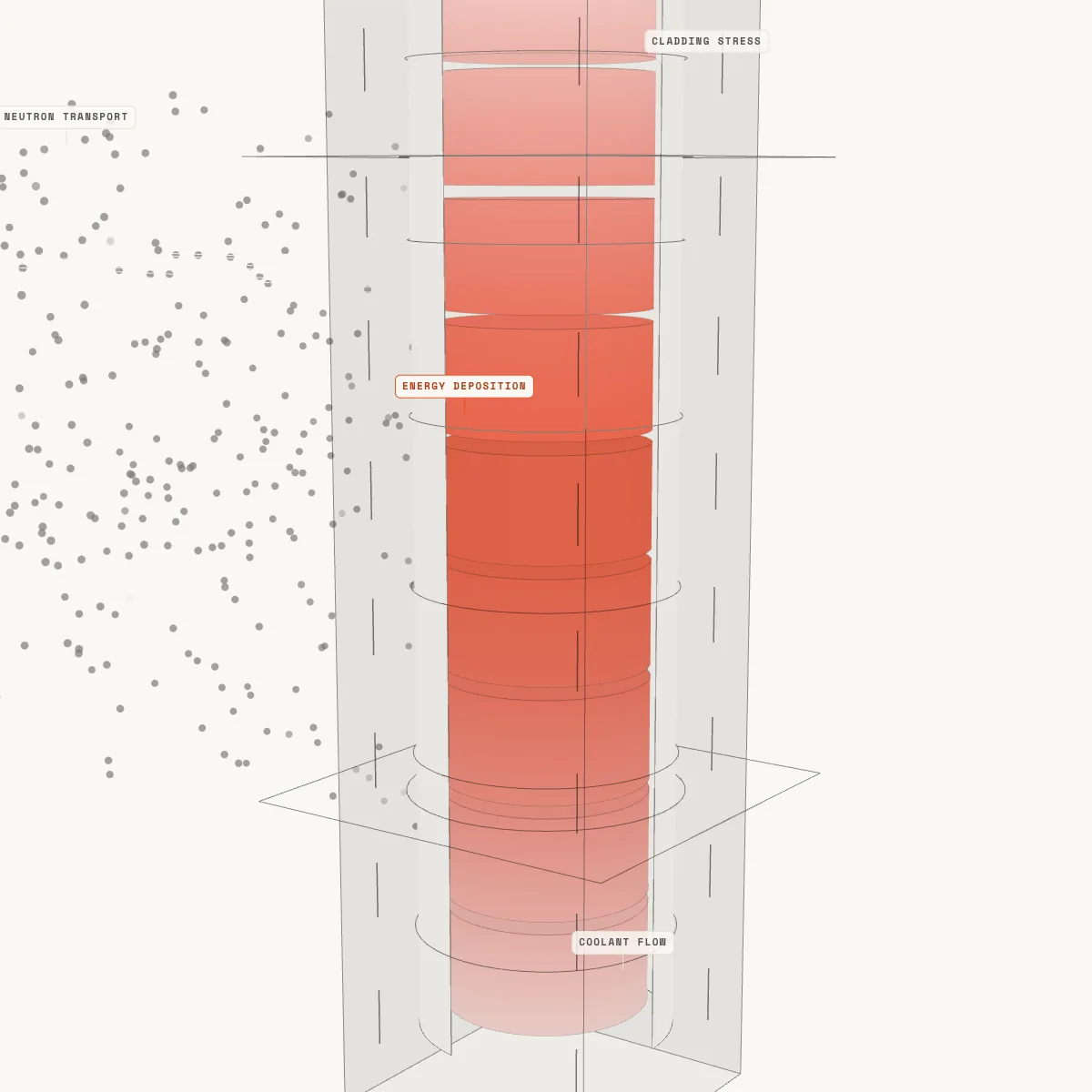
One fuel rod in one coolant channel: neutron transport, energy deposition, heat, flow, stress — every realm of physics that touches it, each run by the code your team already trusts.
Then the machine it lives in.
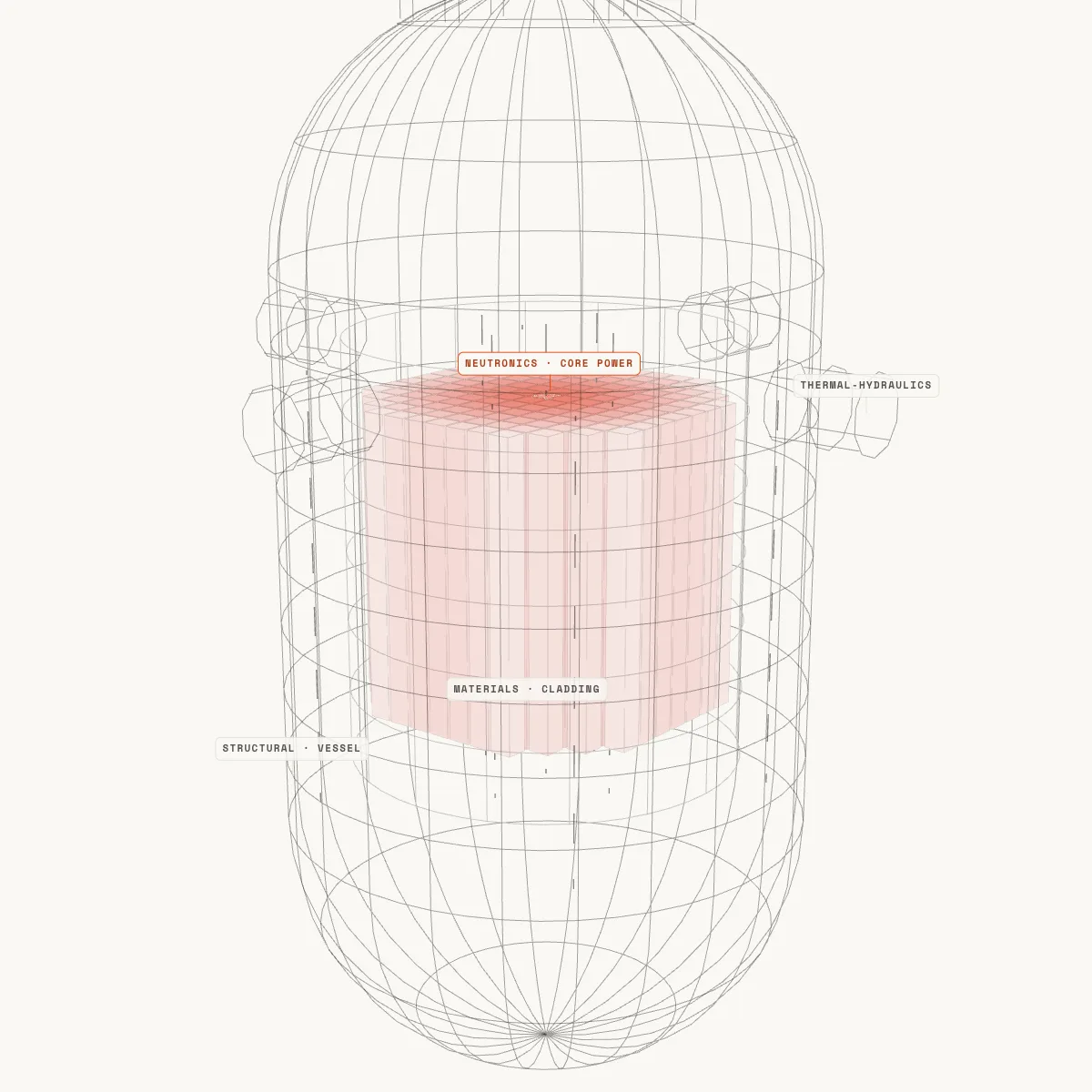
The rod is one of hundreds in an assembly, one of hundreds in the core. Neutronics, thermal-hydraulics, structural, materials — different departments, different codes, one shared, versioned model.
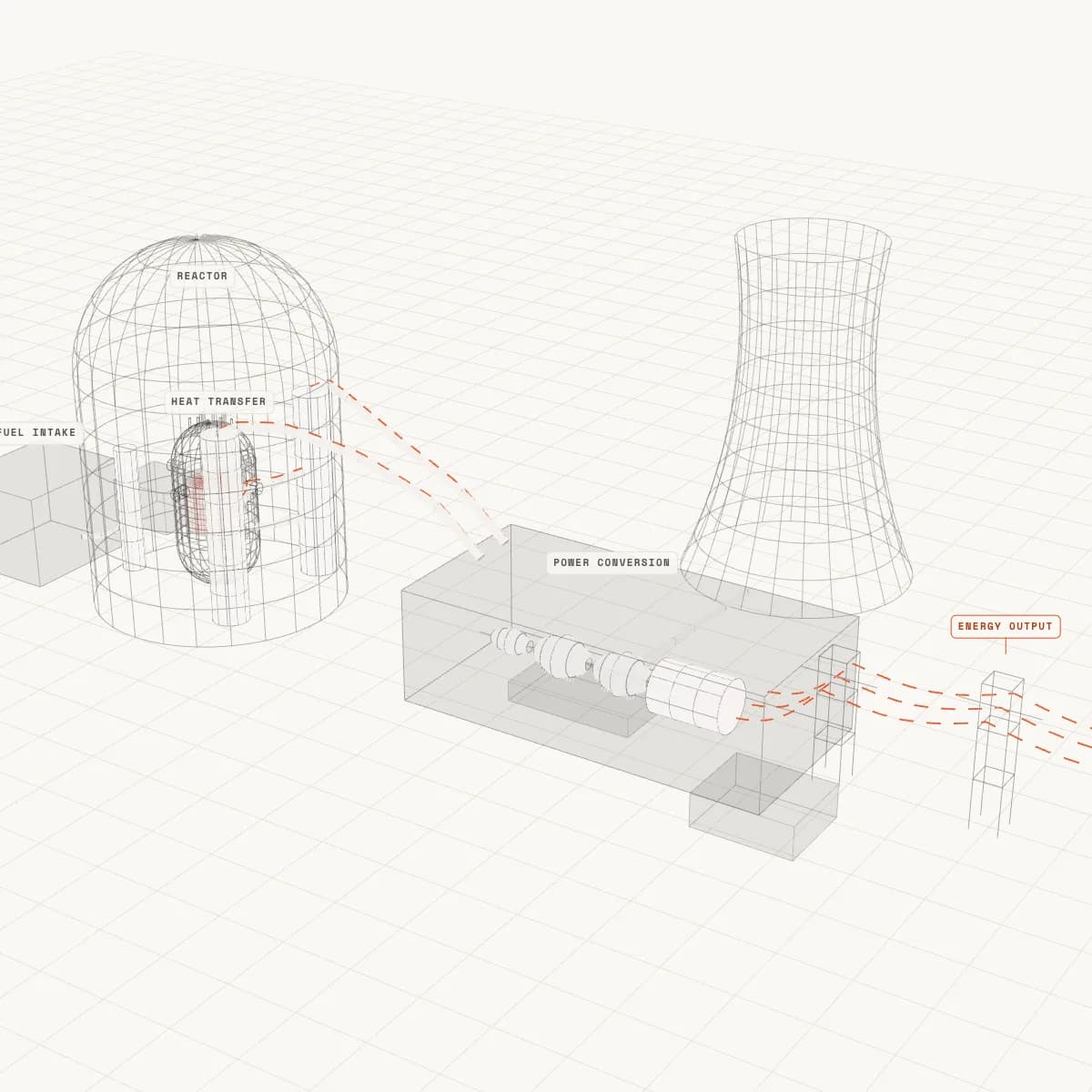
Fuel intake to energy output, one connected model.
Reactor, heat transfer, power conversion, grid. Each department models its own realm of physics; the plant-level view assembles from that work — generated from what teams actually run, never drawn by hand.
See how the whole plant behaves when conditions go extreme.
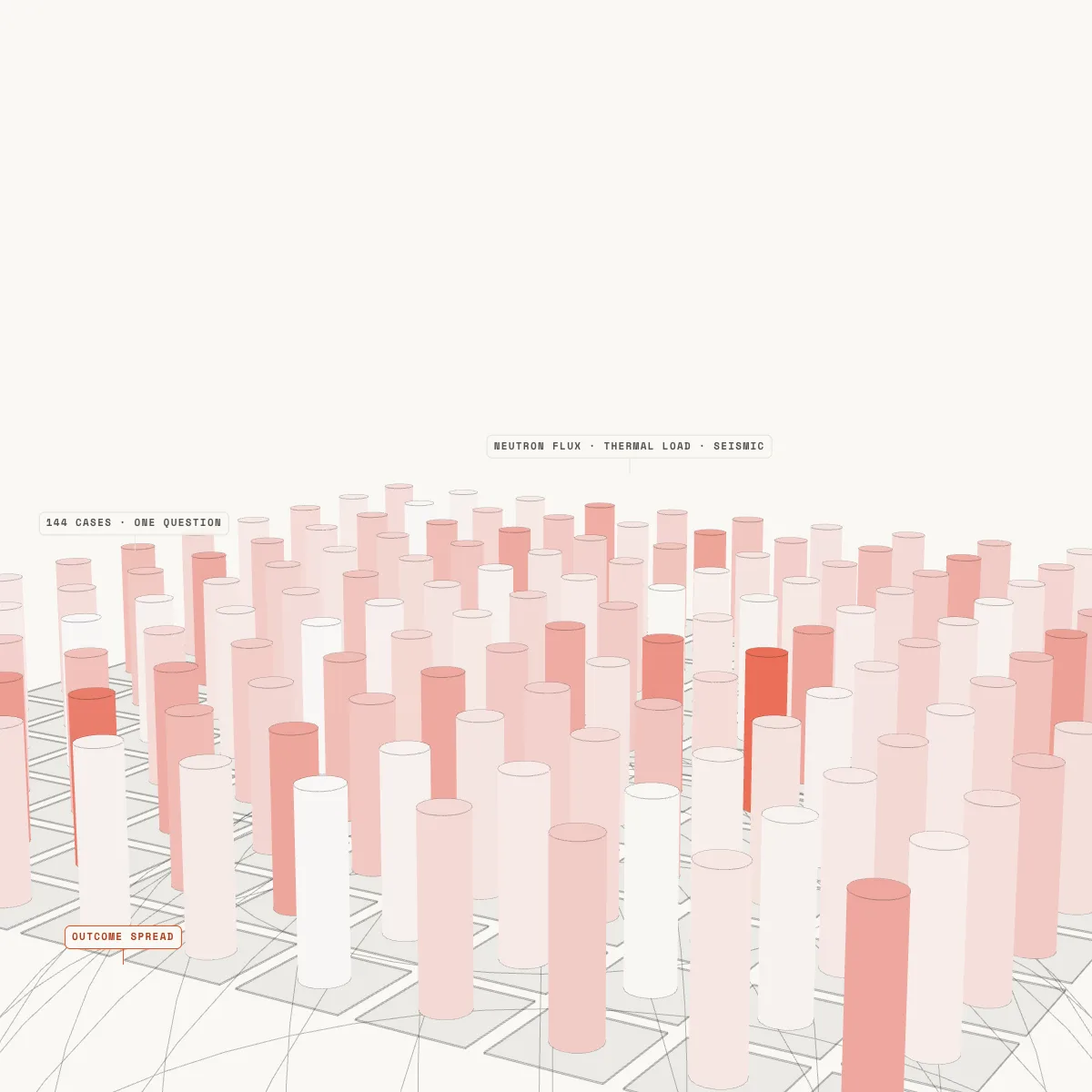
Neutron flux, thermal loads, irradiation, seismic — conditions no test stand can reproduce. Run hundreds of cheap cases with dispersion instead of one heroic run, and decide on the spread, not a single number.
Your people keep their tools. Agents run the campaigns.
Scientists, researchers, and engineers keep working in the codes, notebooks, and CAD they know. Agents compose and execute the sweeps, track every run, and hand back validated results — far more of them than any team could stitch together by hand. People make the calls.
The harness. The orchestration layer. The system of record.
Morton Labs doesn't build solvers. It's the layer that lets every department model its realm of physics and coordinate as one — every input, version, environment, output, and validation in one auditable record.
First-of-a-kind engineering runs on last-of-its-kind software.
The codes that prove the physics were built in academic labs and national programs — unmaintained, non-standardized, unable to interoperate. So physicists become programmers, every team re-stitches the same pipelines by hand, and first-of-a-kind projects pay for it in years and billions.
Four industries. One requirements stack.
The grid is the bottleneck. Engineering throughput is the unlock.
AI buildout made energy the binding constraint. Every answer is first-of-a-kind engineering — and simulation throughput is its fastest lever.
The platform is in beta with first users. We work with leading fusion companies and U.S. national laboratories.
From scattered codes to one system.
- ConnectAdapters onboard the codes you already run.
- OrchestrateCampaigns execute across any computing environment.
- TraceEvery result carries its full provenance.
- DecideValidated results feed real engineering calls.